
Lean Six Sigma vs Traditional Six Sigma: A Complete Guide for Quality Professionals
Lean Six Sigma vs Traditional Six Sigma explained with differences, tools, benefits, methodologies, examples, and industry use cases for quality professionals.
In today’s competitive global market, organizations must improve quality, reduce waste, cut costs, and deliver faster results. Two powerful methodologies used to achieve these goals are Traditional Six Sigma and Lean Six Sigma. Although both are rooted in continuous improvement, they differ in their approach, tools, philosophy, and outcomes.
Understanding Lean Six Sigma vs Traditional Six Sigma is essential for Quality Engineers, Managers, Process Analysts, Manufacturing and Operations Leaders, and anyone preparing for a Six Sigma career.
This article explains both methodologies in a clear, practical, human-written manner—so you can easily understand which approach is better suited for your organization.
In today’s fast-moving and highly competitive business environment, organizations are no longer satisfied with only reducing defects; they also want faster delivery, lower costs, and smoother workflows. This is where the comparison between Lean Six Sigma and Traditional Six Sigma becomes important.
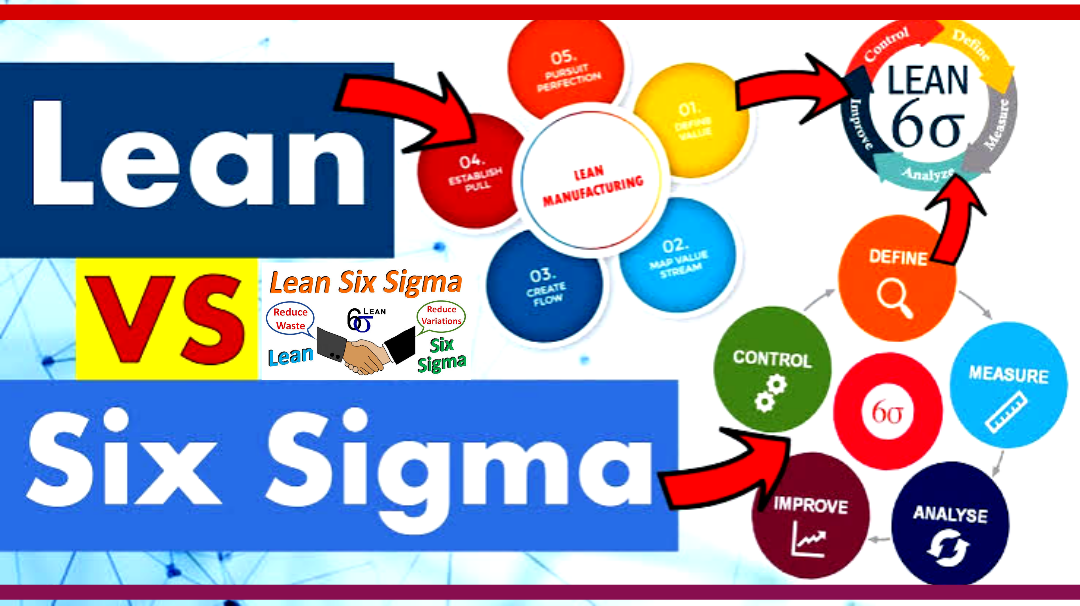
Traditional Six Sigma focuses mainly on reducing variation and improving quality through statistical analysis and the DMAIC framework, making it ideal for solving complex, data-intensive problems. Lean Six Sigma, on the other hand, combines this strong analytical foundation with Lean principles that eliminate waste and improve process flow.
By integrating speed, efficiency, and quality into a single improvement approach, Lean Six Sigma helps companies achieve quicker results, better customer satisfaction, and sustainable performance. For quality professionals and organizations aiming for continuous improvement, understanding the difference between Lean Six Sigma and Traditional Six Sigma provides a clear direction for choosing the most effective methodology for today’s business challenges.
🔍 What is Traditional Six Sigma?
Six Sigma is a data-driven quality improvement method developed by Motorola and popularized by General Electric (GE). Its primary goal is to reduce process variation, eliminate defects, and improve process capability.
Key Focus of Six Sigma:
✔ Reduce defects
✔ Improve process capability
✔ Minimize variation
✔ Achieve 3.4 defects per million opportunities (DPMO)
✔ Use statistical tools to solve problems

Six Sigma uses the DMAIC methodology:
- D – Define the problem and customer requirements
- M – Measure current process performance
- A – Analyze the root causes
- I – Improve with optimized solutions
- C – Control to maintain new performance levels
Six Sigma is mainly used when:
• The process is stable
• Data is available
• The goal is to reduce defects
• Deep statistical analysis is required
🔧 What is Lean?
Lean is a methodology developed from the Toyota Production System (TPS), focused on maximizing value and eliminating waste (non-value-added activities).
Key Focus of Lean:
✔ Reduce process waste (TIMWOOD: Transportation, Inventory, Motion, Waiting, Overproduction, Overprocessing, Defects)
✔ Improve flow and speed
✔ Reduce lead time
✔ Improve efficiency
Lean uses simple, visual, and flow-based tools such as:
• 5S
• Kaizen
• Value Stream Mapping (VSM)
• Standard Work
• Visual Management
• SMED (Quick Changeover)
• Kanban
• Poka-Yoke
Lean works best when:
• The process is slow, inefficient, or full of waste
• Speed and flow are the highest priority
🔄 What is Lean Six Sigma?
Lean Six Sigma is a hybrid approach combining:
- Lean’s speed and waste reduction
- Six Sigma’s defect reduction and statistical analysis
The goal is to improve quality, speed, cost, and customer satisfaction simultaneously.
Lean Six Sigma Solves Problems Like:
✔ High cycle time
✔ Long waiting time
✔ High defect rate
✔ Inefficient workflow
✔ High operating cost
It uses DMAIC, but adds Lean tools into every phase.
🚀 Checkout These Career-Boost Kits
- 📘 APQP Document 100+ – Click Here
- 📊 Production PPC 90+ Documents PPT – Click Here
- 📑 Six Sigma Format – Click Here
- 🎯 Dream Job Kit – Click Here
- 📂 60+ PPT Pack – Click Here
- 🗂️ HR Formats 100000+ – Click Here
- ✅ ISO 9001:2015 Toolkit – Click Here
- ⚙️ IATF (A–Z All Formats) – Click Here
- 📄 Resume Templates 700+– Click Here
⚔️ Lean Six Sigma vs Traditional Six Sigma: Detailed Comparison
| Feature | Traditional Six Sigma | Lean Six Sigma |
|---|---|---|
| Main Goal | Reduce defects & variation | Reduce waste + variation |
| Primary Focus | Quality | Quality + Speed |
| Approach | Statistical | Statistical + Flow-based |
| Best For | Complex quality issues | End-to-end process improvement |
| Tools Used | DMAIC, Hypothesis testing, SPC | DMAIC + 5S, Kaizen, VSM |
| Data Requirement | High | Moderate |
| Project Duration | 3–6 months | 1–4 months |
| Industry Usage | Manufacturing, Healthcare | Manufacturing, Services, IT, BPO, Logistics |
| Team Size | Larger teams | Smaller, cross-functional |
🏭 Real-world Example
Traditional Six Sigma Example
A manufacturing line producing engine parts shows high defect rate of 4%.
Six Sigma uses statistical tools (ANOVA, Regression, DOE) to reduce variation and decrease defects to 0.1%.
Lean Six Sigma Example
A service center has long customer waiting times.
Lean tools (Value Stream Mapping, Kaizen) reduce waste, while Six Sigma tools verify improvement. Waiting time reduces by 40%.
🎯 Which One Should an Organization Choose?
Use Traditional Six Sigma when:
✔ Defect reduction is priority
✔ You need statistical root-cause analysis
✔ The process is stable but inconsistent
Use Lean Six Sigma when:
✔ You need faster, simpler improvements
✔ Waste is high
✔ Process speed, flow, and quality all need improvement
Modern industries mostly prefer Lean Six Sigma because it is flexible, fast, and suitable for both manufacturing and service sectors.
Organizations across manufacturing, service, IT, healthcare, logistics, and BFSI are under constant pressure to improve quality, reduce costs, and deliver faster results. Lean Six Sigma has emerged as one of the most effective and globally recognized methodologies for achieving all three objectives simultaneously.
By combining Lean (waste elimination) and Six Sigma (variation reduction), Lean Six Sigma offers a structured, data-driven approach for improving efficiency, customer satisfaction, and business performance.
This human-written article explains the top benefits of Lean Six Sigma with simple explanations, real-world examples, and strong SEO optimization for maximum ranking.
📌 Top 15 Benefits of Lean Six Sigma
1. Reduces Waste Significantly (TIMWOOD)
Lean Six Sigma helps eliminate the 7 types of waste—Transportation, Inventory, Motion, Waiting, Overproduction, Overprocessing, and Defects.
This instantly improves process efficiency and speed.
Example:
A packaging line reduces waiting time by reorganizing material flow.
2. Improves Product Quality & Consistency
Six Sigma tools focus on reducing variation, which leads to consistent outputs and fewer defects.
Result:
Higher process capability (Cpk > 1.33) and better customer satisfaction.
3. Minimizes Defects and Errors
Using statistical tools like Pareto, Fishbone, Hypothesis Testing, and DOE, teams identify root causes and eliminate defects.
Benefit:
Fewer rejections, reduced scrap, and lower customer complaints.
4. Enhances Customer Satisfaction
Better quality + faster delivery = happier customers.
Lean Six Sigma ensures that processes align with customer CTQs (Critical to Quality).
5. Reduces Operational Costs
By cutting waste and defects, organizations reduce:
✔ Scrap cost
✔ Rework cost
✔ Labor and machine cost
✔ Material cost
✔ Delay penalties
Many organizations achieve 10–30% cost reduction after applying LSS.
6. Increases Productivity & Efficiency
Lean tools improve flow, reduce cycle time, and streamline processes.
Six Sigma ensures that the improved process remains stable and controlled.
Example:
Cycle time reduces from 8 hours to 5 hours.
7. Improves Process Speed & Lead Time
Lean eliminates waiting, motion, and bottlenecks.
This results in:
✔ Faster order processing
✔ Faster manufacturing cycle
✔ Faster service response
🚀 Checkout These Career-Boost Kits
- 📘 APQP Document 100+ – Click Here
- 📊 Production PPC 90+ Documents PPT – Click Here
- 📑 Six Sigma Format – Click Here
- 🎯 Dream Job Kit – Click Here
- 📂 60+ PPT Pack – Click Here
- 🗂️ HR Formats 100000+ – Click Here
- ✅ ISO 9001:2015 Toolkit – Click Here
- ⚙️ IATF (A–Z All Formats) – Click Here
- 📄 Resume Templates 700+– Click Here
8. Strengthens Data-Driven Decision Making
Lean Six Sigma relies on statistical evidence instead of assumptions.
Teams learn to use data for:
✔ Root cause analysis
✔ Process control
✔ Risk reduction
✔ Forecasting
9. Encourages Continuous Improvement Culture
Lean Six Sigma promotes:
✔ Daily Kaizen
✔ Employee involvement
✔ Standardization
✔ Leadership support for improvemnts
A strong continuous improvement culture leads to long-term organizational success.
10. Enhances Employee Skills & Capability
Lean Six Sigma certifications build strong competencies in:
✔ Problem-solving
✔ Analytical thinking
✔ Leadership
✔ Process design
✔ Data analysis
Employees become valuable assets for any company.
11. Improves Cross-Functional Collaboration
Lean Six Sigma requires teams from production, quality, maintenance, planning, logistics, and finance to work together.
This breaks silos and improves communication.
12. Ensures Better Process Control (SPC & Control Plans)
Using Statistical Process Control (SPC), Control Charts, and Control Plans ensures that processes don’t fall back to old performance levels.
13. Reduces Risk & Prevents Failures
Tools like:
✔ FMEA
✔ Risk Priority Number (RPN)
✔ Control Charts
help identify risks early and prevent failure
14. Improves ROI on Projects
Lean Six Sigma projects typically deliver high financial impact through:
✔ Cost savings
✔ Quality improvements
✔ Faster processes
✔ Better resource utilization
Most organizations calculate ROI through project savings vs. investmnt.
15. Strengthens Competitive Advantage
Companies using Lean Six Sigma become faster, more reliable, and more cost-efficient.
This creates a competitive advantage in global markets.
Both Traditional Six Sigma and Lean Six Sigma are powerful continuous improvement methods.
But today’s fast-paced industries need improvements that are:
✔ Faster
✔ Cost-efficient
✔ Customer-focused
✔ Flexible
This makes Lean Six Sigma the preferred methodology across manufacturing, IT, services, logistics, healthcare, and more.
Whether you are preparing for certification or working in quality roles, understanding both approaches will significantly enhance your career.
Lean Six Sigma vs Traditional Six Sigma, Lean vs Six Sigma, Lean Six Sigma difference, Six Sigma methodology, Lean Six Sigma benefits, DMAIC vs Lean tools, Lean Six Sigma examples, Six Sigma defects, Lean waste reduction, Toyota Lean, Six Sigma manufacturing are covered in this topic. Indupath help to improve your skills.